Drains and sewers
Drain installation
£1,500 to £5,000 is the typical price to lay a drain run for a house, or £80 to £250 per metre. A connection to the public sewer is priced separately. The depth of the pipe, the pipe size and the ground affect the price.
Post your drain job to Premium membersTell us about your job once. Premium drain specialists who cover your area can then contact you.Describe your job
What this covers
What it costs. Laying a drain run for a house usually costs £1,500 to £5,000, or £80 to £250 per metre depending on depth and pipe size. Full cost breakdown.
What the job covers
- Laying a drain run for a house, extension or outbuilding
- Connecting a drain to the public sewer
- Adding a gully or a channel drain
- Fitting inspection chambers along the run
- Drainage for a driveway
Worth knowing
England
In England, Thames Water says you will likely need a build over agreement if you are building within 3 metres of a public sewer, or within 1 metre of the point where a private pipe crosses your boundary and becomes a public lateral drain. It says planning permission does not give you permission to build over a sewer or drain. It says that without one you may not get a Building Regulations completion certificate, which can cause problems when selling.
Thames Water, Do I need a build over agreement?, thameswater.co.uk/help/home-improvements/do-i-need-a-build-agreement
What is involved
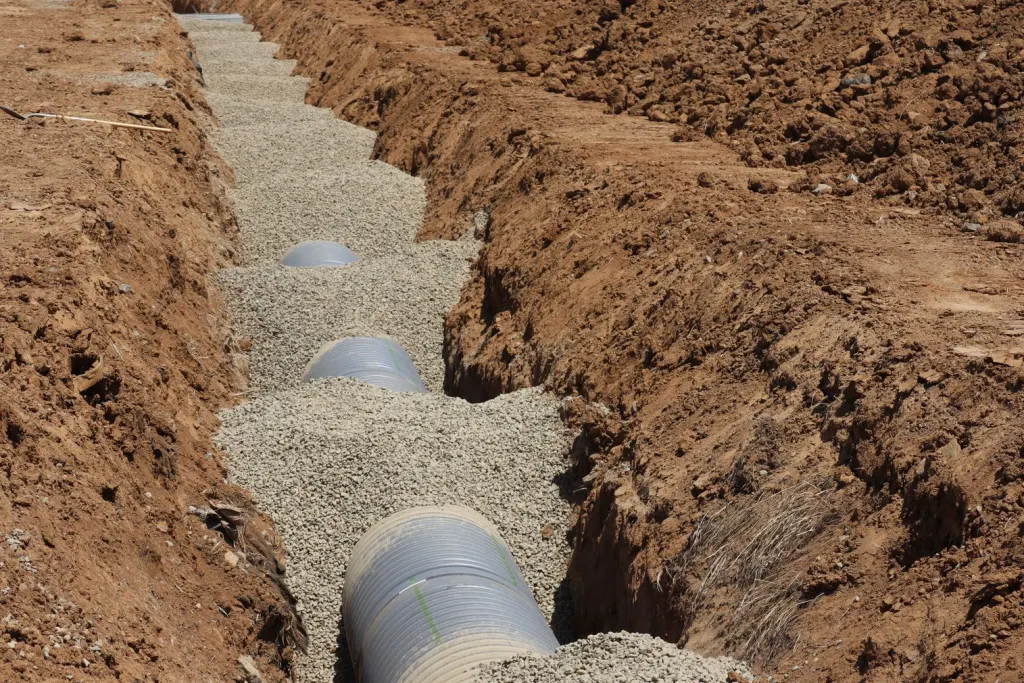
Drain installation means laying pipes to carry foul water, such as waste from toilets and sinks, or rainwater, from a building to a sewer, a soakaway or another outlet. It is needed for an extension, an outbuilding, a house on a plot with no existing drains or a driveway that needs surface water drainage. The pipes are usually plastic, laid in a trench on a bed of gravel at a slope, with inspection chambers where the pipe changes direction.
A drain specialist or groundworks firm marks out the line, digs the trench with a digger, lays and connects the pipe, tests it and fills the trench. In England, the Planning Portal says approval under the Building Regulations is not normally required to repair a drainpipe or replace it like for like, but installing a drainpipe where there was none before, including extra rainwater or foul drains, normally needs approval. The Welsh Government says building work on and around a sewer needs the permission of the sewer owner, and that building over or near a public sewer needs the written agreement of the sewerage undertaker. Private drains are not usually mapped, so their position may need to be found using drain covers or a CCTV survey.
The price depends on the depth, the pipe size, the length of the run, the ground and how much has to be dug up and put back. Roads and paving cost more to reinstate than a lawn. Guides give £80 to £250 per metre, and one guide lists much lower per-metre prices. A connection to the public sewer is a separate job with its own consent, and one guide puts it at £800 to £2,500.
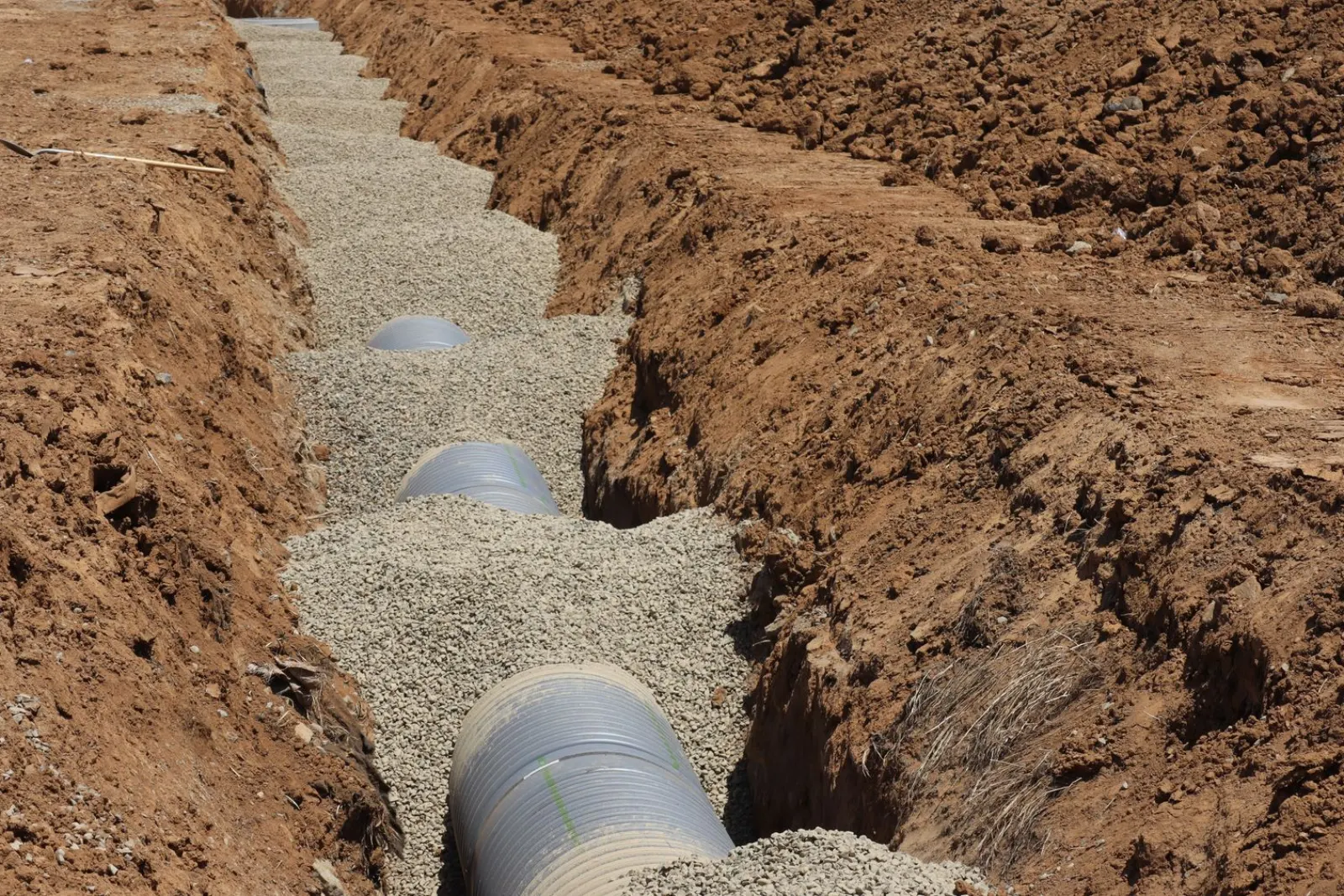
Laying a drain run for a house, extension or outbuilding, one of the jobs a drain specialist is hired for.
Choosing someone for the job
Ask whether the price covers digging, pipe, chambers, testing and putting the ground back. Ask who applies for Building Regulations approval and for any permission from the water company. Ask how deep the pipe will go and what size it will be. Ask for a written quote with each part listed.
Worth reading first:
Related jobs:
Common questions
Do I need approval to install a drain?
In England, the Planning Portal says installing a drainpipe, manhole or fitting where there was none before, including extra rainwater or foul drains, normally needs approval under the Building Regulations. Repairs and like-for-like replacements normally do not. Check with your local council.
Do I need permission to connect to the public sewer?
The Welsh Government says building work on and around a sewer needs the permission of the sewer owner. In England the water company is the owner of a public sewer, so contact it before any connection. A drain specialist can tell you what to apply for.
How do I find out where my drains run?
Private drains are not usually mapped. The Welsh Government says their position may need to be found using drain covers or a CCTV survey, in which a camera is fed along the pipe. Your water company may hold records of public sewers.
Can I build over a drain?
In England, Approved Document H says buildings should not be put over or within 3 metres of a drain or sewer more than 3 metres deep, or over 225mm across, without the permission of the owner. For a public sewer the owner is the sewerage undertaker. In England, Thames Water says planning permission does not give you permission to build over a sewer or drain.